Your scheduling problem is a staffing problem wearing a calendar costume
A four-bay shop goes shopping for a better scheduling tool. The calendar was never the bottleneck. The one person who can commit to it was.
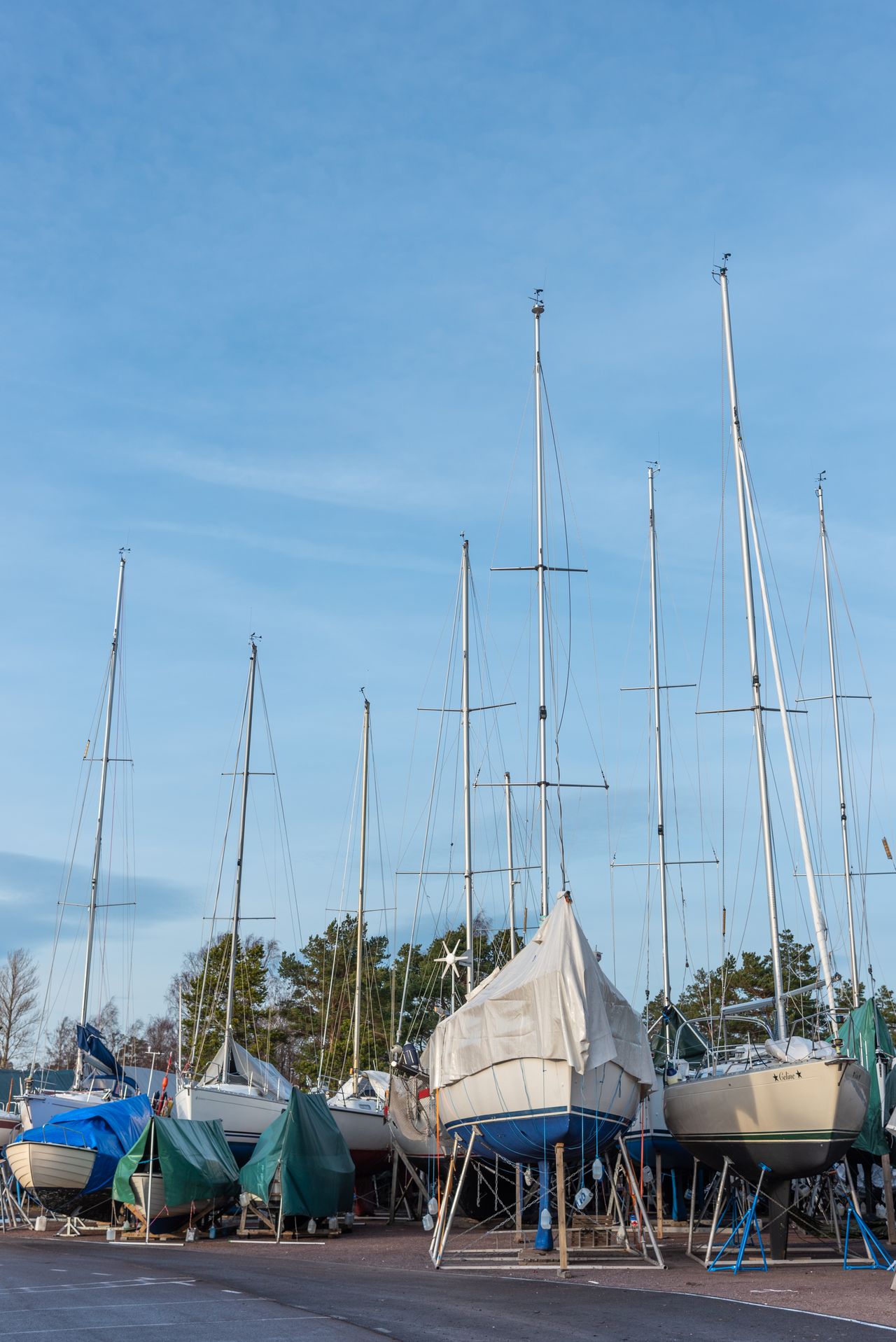
Composite four-bay marine service shop, modeled numbers, not a client result.
10:40am on a Tuesday in August. The service writer is at the counter with a customer whose outdrive is leaking, and that customer is holding a phone with a photo of the leak on it. Behind her, two techs are waiting on a parts answer. Out the window, a 28-footer is sitting on the trailer in the wash bay because nobody has told the yard guy where to put it yet.
The phone rings. It rings a second time. She looks at it and lets it go, and she is right to. The person in front of her is real money standing on the floor. The phone is a maybe.
The maybe was an impeller and water pump on a boat that runs a lake three hours away. That caller leaves no message. By lunch he has booked somewhere else, and nobody in your shop will ever know he called.
The calendar was never the bottleneck
Every busy yard eventually goes shopping for a better scheduling tool. Bigger board, color coding, a shared calendar on the wall of the shop. Sometimes it helps a little.
It rarely fixes anything, because the calendar is not what is broken. What is broken is that the one person who can read the calendar and commit to it is also the person greeting customers, ordering parts, quoting jobs, taking payments, and walking out to bay three when a tech waves.
She is not slow. She is one person doing five jobs, and the phone is the job with the least resistance to being dropped. Nobody complains when a call goes unanswered. The customer at the counter complains immediately. So the phone loses, every single time, all season.
That is not a discipline problem. It is arithmetic.
What the same morning looks like when nothing gets dropped
Replay it. Same Tuesday, same leaking outdrive at the counter, same two techs waiting.
The phone rings once and the AI picks up. It sounds like a person, and it asks the things your service writer would ask. What is the boat, make and length. What is it doing, and is it in the water or on a trailer. When can you get it here.
It reads live open bay time from DockMaster or BluMarina, offers Thursday morning, and books it. Then it texts the caller a confirmation with the address and what to bring. If the job needs a quote before anyone touches it, the quote goes out in the same thread, the customer taps to accept, signs, and the deposit is collected right there.
Your service writer finds out about all of it later, from one inbox, with an AI summary at the top and the full transcript underneath if she wants to check what was promised. Voice, text and email in the same place, searchable.
Nobody had to choose between the customer on the floor and the customer on the phone. That is the whole idea.
The number, and where it comes from
Here is the model for the composite shop above. Four bays, one service writer, a 16-week in-water season.
| The modeled shop | Modeled |
|---|---|
| Inbound calls a week in season | ~60 |
| Arriving while the writer is genuinely unavailable | ~15 |
| Of those, real bookable jobs now gone | 2 / week |
| Average small service ticket | ~$540 (about 2.5 hours of labor plus parts) |
| Work walking out the door per week | ~$1,080 |
| Across a 16-week season | ~$17,000 |
Two jobs a week at $540 is $1,080. Across 16 weeks that is roughly $17,000 of work that walked, in a shop where the techs had the hours to do it.
Those are assumptions, not measurements, and you should push on them. Halve the missed volume and drop the ticket to $350 and you land near $5,600, which is still real money for a four-bay shop. The model also leaves out the part that is hardest to price: the customer who called once, got voicemail, and never considered you again.
Why an answering service does not solve this
An answering service takes a message. A chatbot on your website answers a question. Both stop exactly where the value starts, which is the moment somebody has to look at the bay schedule and commit.
BluSynq books. It reads and updates your live system, holds the slot, sends the quote, captures the signature, takes the deposit. And you control how much rope it gets. Manual mode means it drafts and you send. Ask mode means it checks with you before it commits. Auto mode lets it handle routine bookings on its own.
Most shops start in Ask for a couple of weeks, watch the transcripts, then move the ordinary stuff to Auto once they trust it. That is the sensible way to do it.
The honest close
BluSynq is early. We are not going to pretend a five-year customer list exists. What we will do is let you test the thing directly instead of taking our word for it.
Call +1 (775) 403-6388 and act like a boat owner in a hurry. Ask about a haul-out. Interrupt it. Change your mind mid-sentence. Then decide whether it belongs on your line at 10:40 on a Tuesday in August.
If it does, it goes live in under a day. No setup fee, cancel whenever.
Illustrative scenario. BluSynq is an early-stage product; figures shown are modeled from typical marina operations and industry patterns, not a specific customer result. Your numbers will vary.